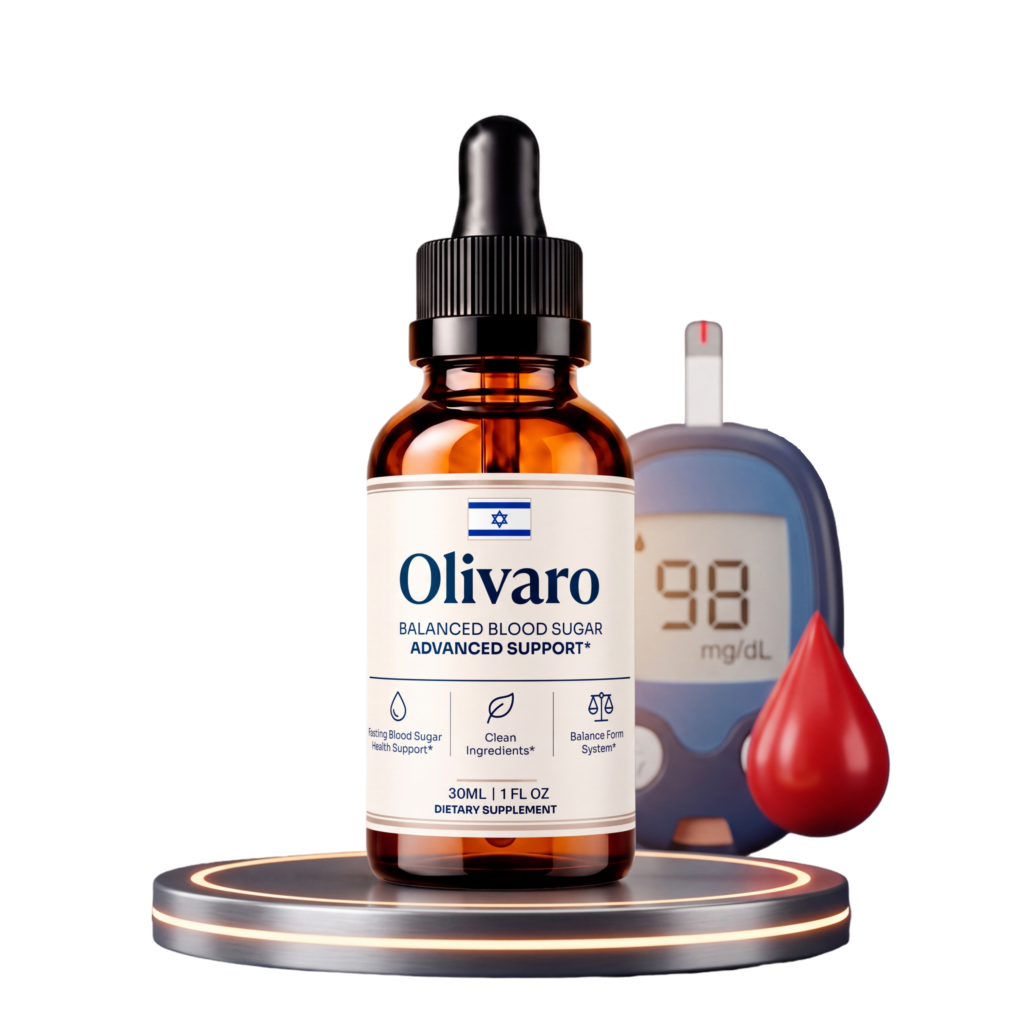
Talk to your doctor or pharmacist before taking any supplement if you have diabetes or take diabetes medication. Never stop or change your medication on your own. Get urgent care right away for emergency symptoms such as confusion, trouble breathing, fainting, repeated vomiting or a seizure.
The Olivaro label lists one ingredient with its own amount and then a block of 22 more under a single weight. This guide takes the label apart line by line: what each item is, how much of it the label discloses, what published human studies of that ingredient found, and what cautions apply. It is about ingredients in general. It cannot tell you what this finished product does.
The label at a glance
Serving
1 ml. The label says 30 servings per 30 ml bottle and suggests 1 or 2 droppers a day.
Named amount
Chromium (as chromium picolinate): 0.7 mcg, listed as 2 percent of the Daily Value.
Blend
"Proprietary Blend" of 22 ingredients, 200 mg in total. No Daily Value is established.
Other ingredients
Glycerin, water, organic lemon extract, stevia extract (Reb A), xylitol, sodium benzoate, potassium sorbate, citric acid and natural flavors.
How to read the evidence column
We use four plain labels. Mixed means human trials exist but results differ or are small. Preliminary means early or very limited human data. Not shown means reviews we read did not show the claimed benefit or we found no human trial. Not assessed means we did not review blood sugar research for that item, so we make no statement. None of these labels is a promise about this product. The National Center for Complementary and Integrative Health (NCCIH) sums up the field: for a few supplements there is weak evidence of possible benefit, but for most there is no evidence of benefit for diabetes (NCCIH summary).
Group 1: the one named amount
| Ingredient | On this label | What research on the ingredient found | Evidence | Cautions |
|---|---|---|---|---|
| Chromium picolinate | 0.7 mcg per ml (2% DV) | A 2014 review of 25 trials in people with diabetes found lower HbA1c on average (about 0.55 percentage points) and noted improvements may need more than 200 mcg a day. NCCIH calls the evidence weak. | Mixed | NCCIH lists stomach pain and bloating, and a few reports of kidney, liver, muscle and skin problems after large doses. Long-term effects are not well studied. |
The gap between 0.7 mcg and the studied amounts is the main thing to take away. The trials were done with other products at other doses, so they cannot be used to judge this one. See the review: Suksomboon et al., 2014.
Group 2: plant extracts that are often sold for blood sugar or weight
| Ingredient | On this label | What research on the ingredient found | Evidence | Cautions |
|---|---|---|---|---|
| Gymnema leaf extract | Amount not disclosed (inside the 200 mg blend) | A 2003 systematic review in Diabetes Care counted gymnema among supplements with positive preliminary results but said there was not enough evidence for firm conclusions. | Preliminary | Because it has been studied for blood sugar effects, people on diabetes medicine should ask a pharmacist before use. |
| African mango (Irvingia gabonensis) seed extract | Not disclosed | A 2013 systematic review of 3 trials, mostly about body weight, called the results unproven because of poor reporting quality. | Not shown | Reported side effects in those trials included headache and sleep difficulty. |
| Green tea leaf extract | Not disclosed | A 2017 meta-analysis of 6 small trials in people with prediabetes or type 2 diabetes found no differences from placebo in HbA1c or fasting glucose. | Not shown | Concentrated green tea extracts have been linked to liver injury in case reports, mostly at higher doses and when taken on an empty stomach. |
| Panax ginseng, "aerial" extract | Not disclosed | A 2014 meta-analysis of 16 trials found a small drop in fasting glucose but no significant change in some other markers. NCCIH calls the evidence for blood sugar control inconclusive and conflicting. | Mixed | NCCIH says ginseng may lower blood sugar, may interfere with blood clotting and can interact with medicines. The label says "aerial" (above-ground) parts, and we did not check whether the trials used the same part. |
| Maca root extract | Not disclosed | A small 2015 crossover trial in 29 postmenopausal women (3.3 g a day for 6 weeks) found no difference in blood glucose versus placebo. | Not shown | No specific cautions found in our review. |
| Eleutherococcus senticosus, astragalus, grape seed | Not disclosed | We did not review the blood sugar research on these. | Not assessed | Ask a pharmacist, since all three are active plant extracts. |
Sources: Yeh et al., 2003; Onakpoya et al., 2013; Yu et al., 2017; Hu et al., 2018; Shishtar et al., 2014; Stojanovska et al., 2015; NCCIH on Asian ginseng.
Group 3: stimulant-type and "thermogenic" items
| Ingredient | On this label | What to know | Evidence |
|---|---|---|---|
| Guarana seed extract | Not disclosed | Guarana is a natural source of caffeine. The FDA cites 400 mg a day as an amount not generally associated with negative effects for most healthy adults, with wide variation in sensitivity. The label does not state a caffeine amount. | Not assessed |
| Capsicum annuum fruit extract | Not disclosed | A hot pepper extract. We did not review the research. | Not assessed |
| Coleus forskohlii root extract | Not disclosed | We did not review the research. | Not assessed |
| Grapefruit fruit extract | Not disclosed | The FDA says grapefruit and grapefruit juice can change how some medicines work, including some statins and blood pressure drugs. We do not know whether this extract has the same effect, so ask a pharmacist. | Not assessed |
| Raspberry ketones | Not disclosed | Our PubMed search on 12 October 2026 found no systematic review of human trials on weight or blood sugar. | Not shown |
Sources: FDA on caffeine; FDA on grapefruit and medicines.
Group 4: amino acids and a licorice-derived compound
The blend also names L-glutamine, L-tyrosine, L-arginine, beta-alanine, L-ornithine, L-tryptophan, L-carnitine and GABA. These are ingredients you find in sports and amino formulas. We did not review blood sugar research on them and make no claim about them. Each is a separate active ingredient, so the combined effect of eight amino acids plus plant extracts in a few milligrams each is unknown.
The last item, monoammonium glycyrrhizinate, is a salt of the main sweet compound in licorice. NCCIH says glycyrrhizin from licorice can cause serious problems such as irregular heartbeat, especially in large amounts or over a long time, and that even small amounts have been linked to severe effects in some people who consume a lot of salt. The amount here is not disclosed. Anyone with heart rhythm problems, high blood pressure or low potassium, or who takes water pills, should ask before using it. See NCCIH on licorice root.
The "other ingredients"
- Xylitol and stevia are sweeteners. Large amounts of sugar alcohols such as xylitol can upset the stomach in some people.
- Sodium benzoate and potassium sorbate are preservatives common in liquids.
- Glycerin, citric acid, lemon extract and natural flavors are carriers and flavor. "Natural flavors" can hide the identity of what is used, which matters if you have allergies.
What the 200 mg blend means in practice
The average is a simple calculation, not a measured amount. Only the manufacturer knows the real split.
Questions to ask the seller before buying
- What is the exact amount of each ingredient in one 1 ml serving?
- How much caffeine does one serving contain?
- Is each batch tested by an independent laboratory, and can I see the certificate?
- Which part of the ginseng plant is used, and which part was used in the research you rely on?
- Does the product contain any allergen not shown on the label?
If they will not answer in writing, that is information too. For safety questions see the side effects guide. For a wider look at the research, read Do blood sugar supplements work?
Sources
- NCCIH, Diabetes and dietary supplements: what you need to know.
- NCCIH, Asian ginseng.
- NCCIH, Licorice root.
- Suksomboon N, et al. Chromium supplementation in diabetes: systematic review and meta-analysis. J Clin Pharm Ther. 2014.
- Yeh GY, et al. Systematic review of herbs and dietary supplements for glycemic control in diabetes. Diabetes Care. 2003.
- Onakpoya I, et al. The efficacy of Irvingia gabonensis supplementation in overweight and obesity. J Diet Suppl. 2013.
- Yu J, et al. Green tea or green tea extract and glycemic control in type 2 diabetes: a meta-analysis. Diabetes Metab J. 2017.
- Hu J, et al. The safety of green tea and green tea extract consumption in adults. Regul Toxicol Pharmacol. 2018.
- Shishtar E, et al. The effect of ginseng on glycemic control: systematic review and meta-analysis. PLoS One. 2014.
- Stojanovska L, et al. Maca reduces blood pressure and depression in postmenopausal women. Climacteric. 2015.
- FDA, Dietary supplement labeling guide.
- FDA, Spilling the beans: how much caffeine is too much?
- FDA, Grapefruit juice and some drugs don't mix.
Frequently asked questions
What is in Olivaro?
According to the label image on the seller's site, one 1 ml serving has 0.7 mcg of chromium (as chromium picolinate) and a 200 mg proprietary blend of 22 ingredients, plus glycerin, water, lemon extract, stevia, xylitol, preservatives and flavors.
How much gymnema is in Olivaro?
The label does not say. Gymnema leaf extract is one of 22 items in a 200 mg proprietary blend, so its individual amount is not disclosed.
Is the chromium dose in Olivaro high?
No. The label lists 0.7 mcg, which is 2 percent of the Daily Value. A 2014 review of trials in people with diabetes noted benefit mainly above 200 mcg per day, which is about 285 times more.
What is a proprietary blend?
A proprietary blend is a group of ingredients listed with one combined weight. Ingredients are listed from most to least by weight, but you cannot see how much of each one you get.
Do the ingredients in Olivaro work for blood sugar?
Studies of single ingredients at their studied doses are mixed and often small. They do not show what this particular product does. See the evidence guide for how to read that research.